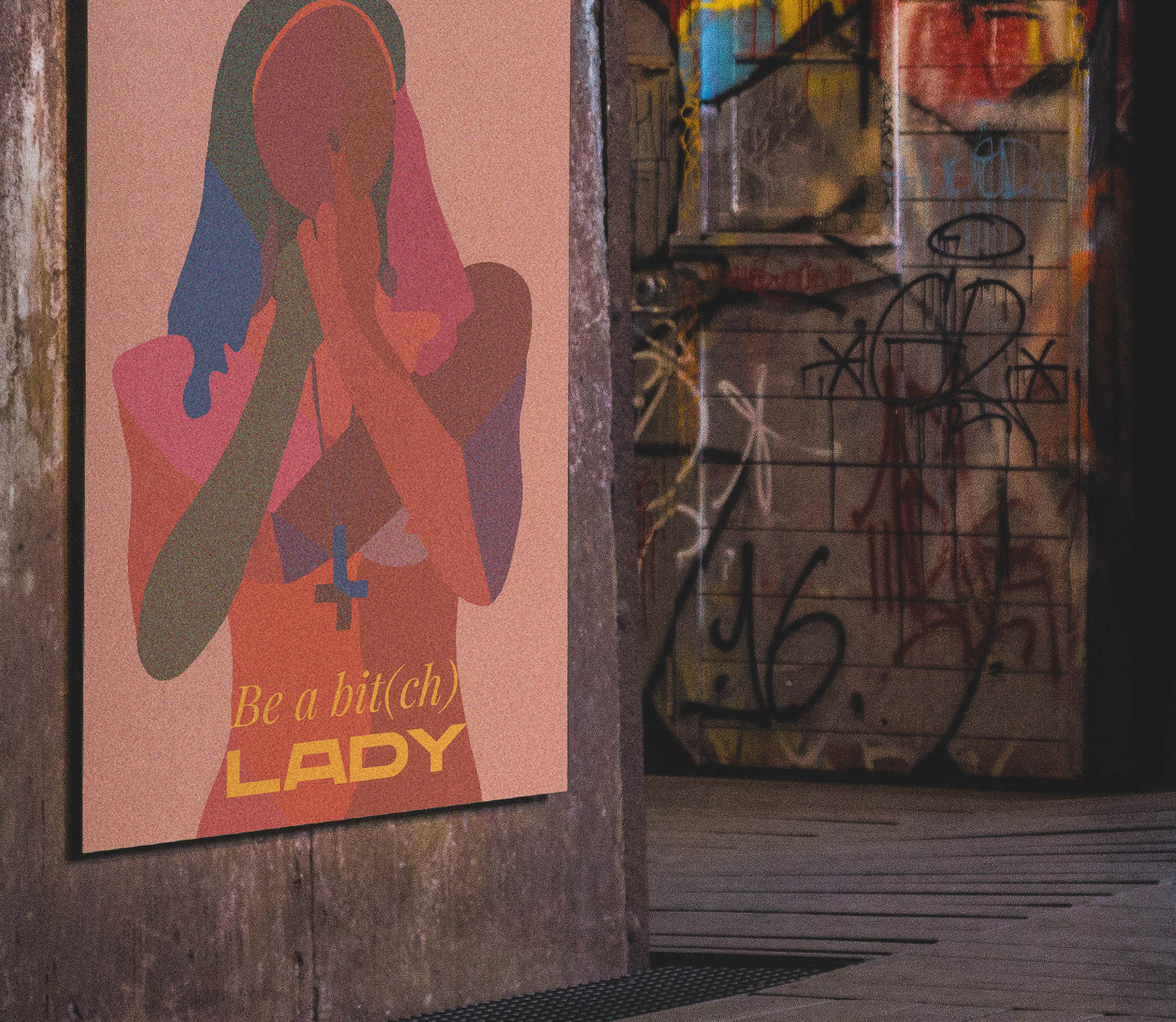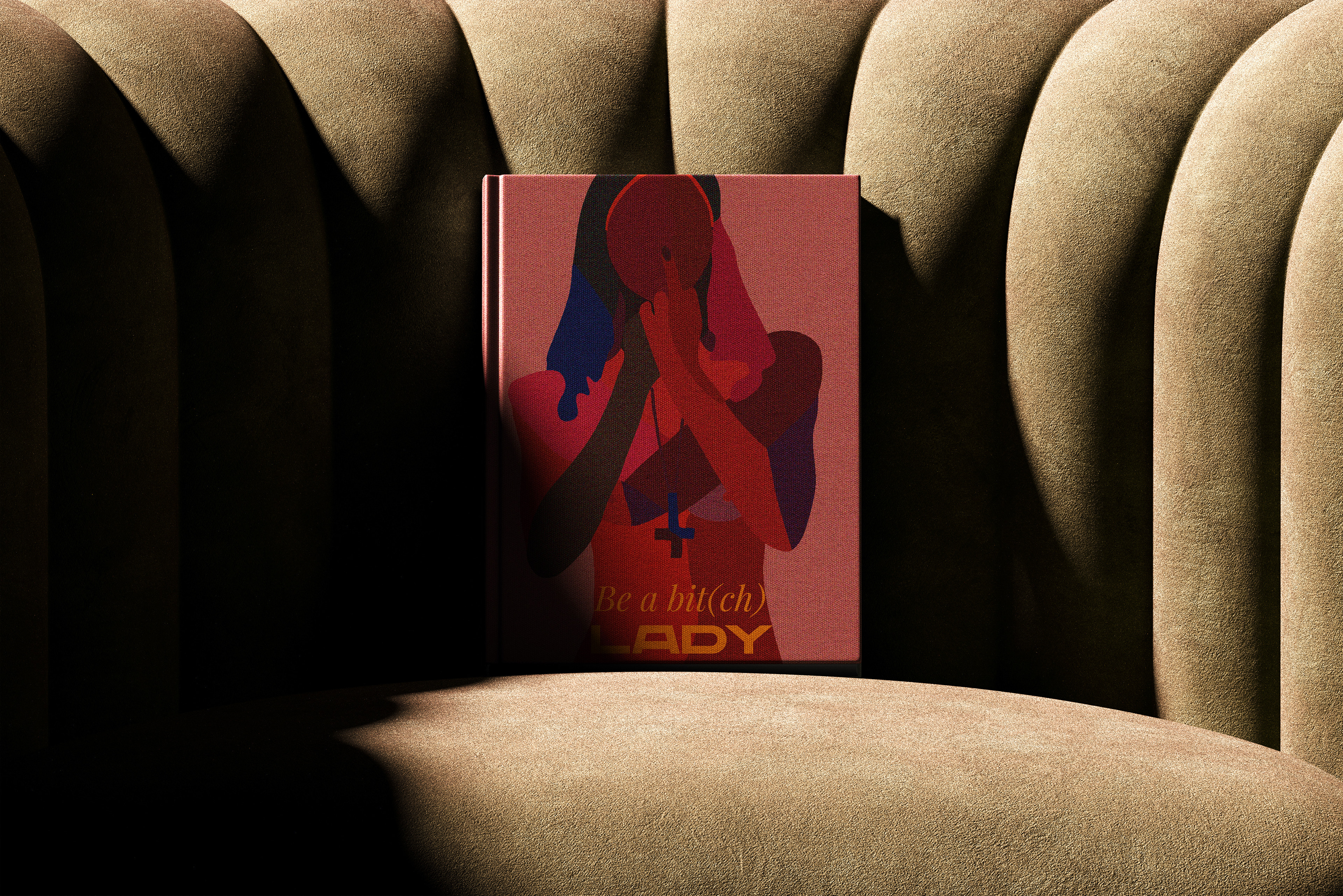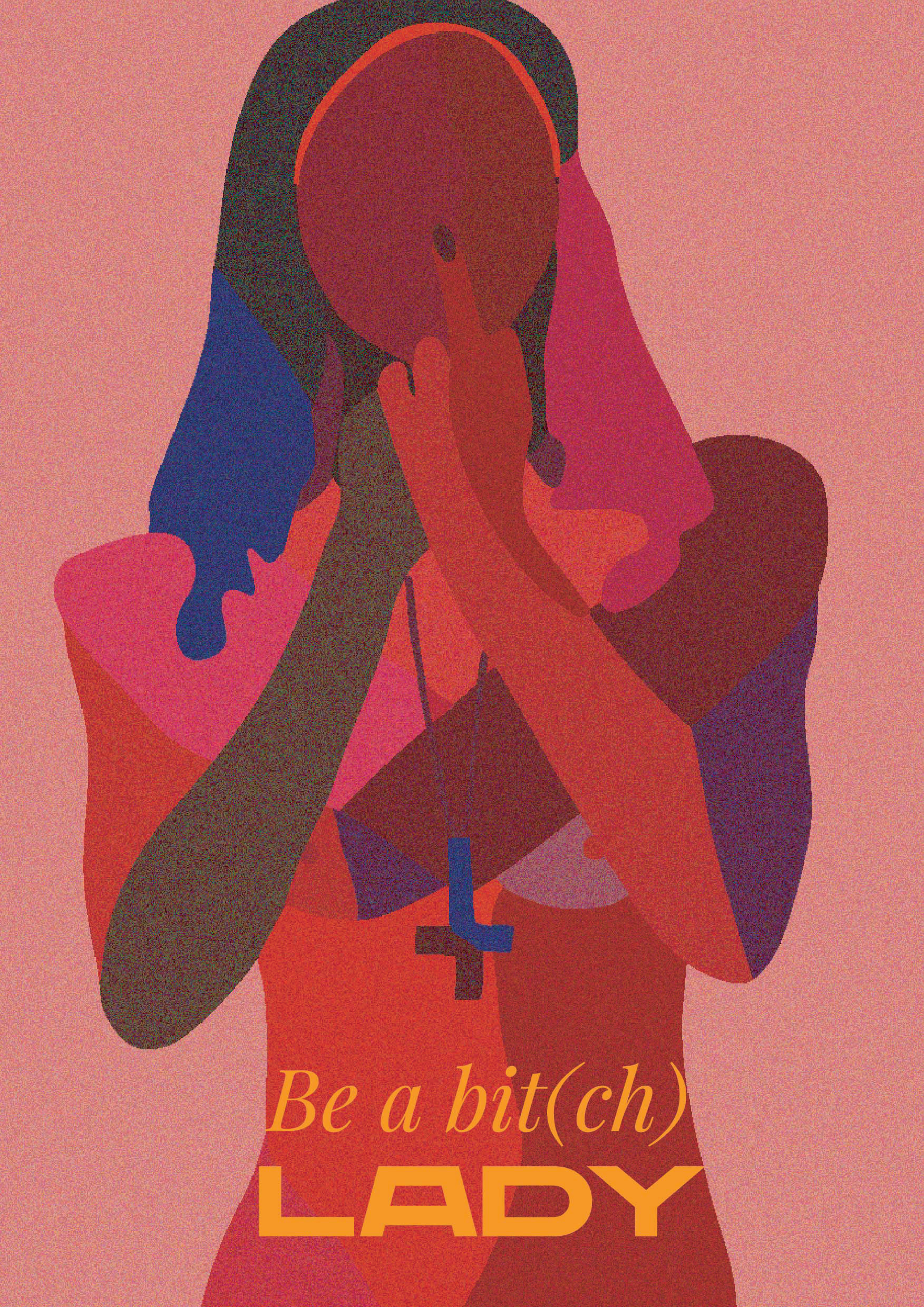
"Be a bit(ch) lady" evokes a symbol deeply rooted in our culture,
referencing behaviors, barriers, and impositions we have
experienced since time immemorial.
It is an invitation not to hide, but to acknowledge the invisible
legacies that shape how we live and perceive the world.
Historically, religion and systems of power have promoted
an image of women associated with silence and ignorance,
confined to puritanical, colonial, and patriarchal roles.
These narratives persist, often subtly, influencing freedom of expression
and the perception of femininity.
The title plays with words and two terms rich in meaning;
"Be a bit(ch) lady" oscillates between being a "lady", a woman
of poise and composure, and a "bitch," a provocative term
here redefined as a symbol of autonomy and power.
Thus, it celebrates the space of tension between societal demands
and the body's yearnings, allowing us to rethink the boundaries
of being wild, untamable, and multifaceted.
referencing behaviors, barriers, and impositions we have
experienced since time immemorial.
It is an invitation not to hide, but to acknowledge the invisible
legacies that shape how we live and perceive the world.
Historically, religion and systems of power have promoted
an image of women associated with silence and ignorance,
confined to puritanical, colonial, and patriarchal roles.
These narratives persist, often subtly, influencing freedom of expression
and the perception of femininity.
The title plays with words and two terms rich in meaning;
"Be a bit(ch) lady" oscillates between being a "lady", a woman
of poise and composure, and a "bitch," a provocative term
here redefined as a symbol of autonomy and power.
Thus, it celebrates the space of tension between societal demands
and the body's yearnings, allowing us to rethink the boundaries
of being wild, untamable, and multifaceted.